
Key takeaways
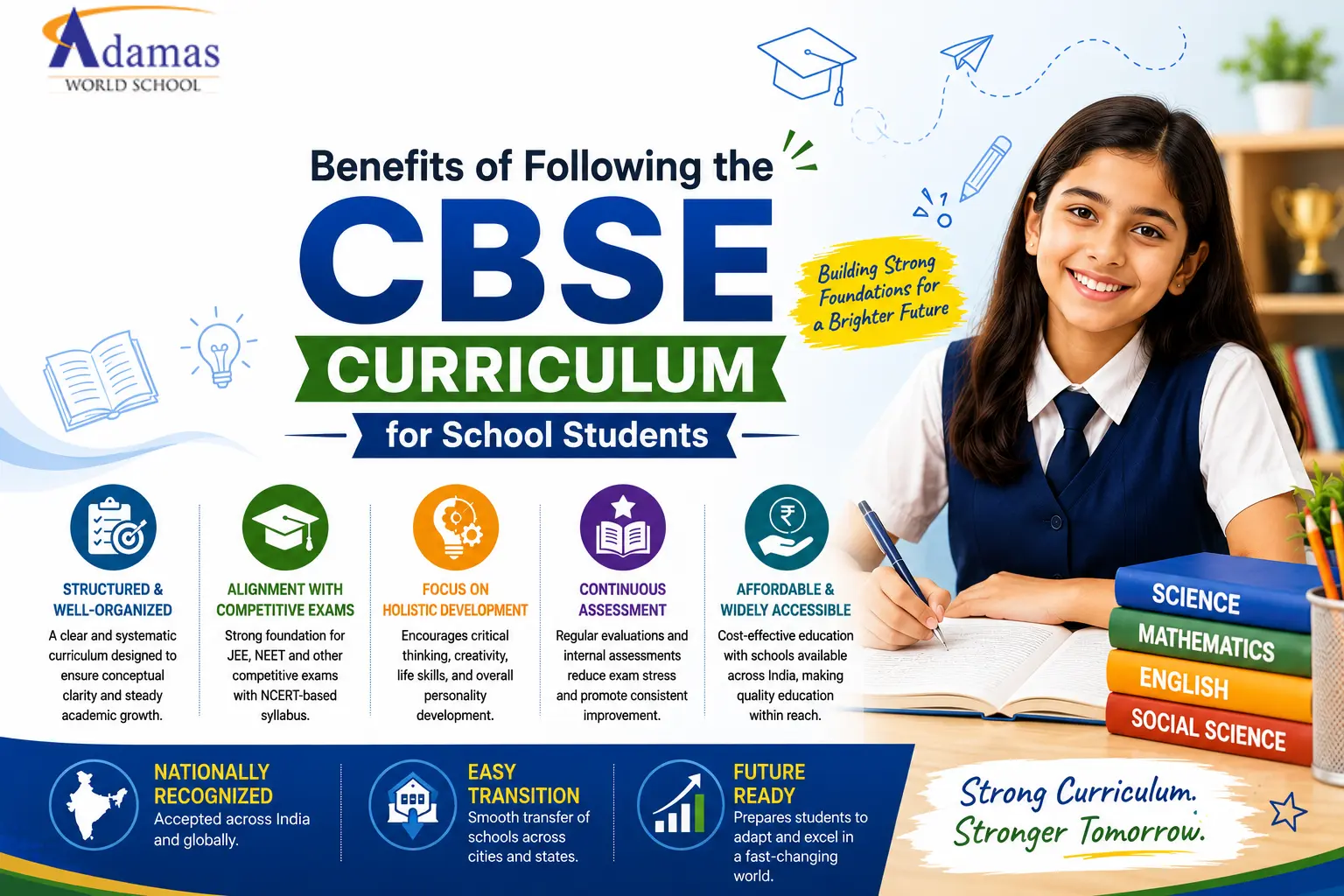
- CBSE is India’s national board, recognised across the country and by institutions abroad, with a structured, standardised curriculum.
- The 2026-27 reforms, aligned with NEP 2020, shift the focus from rote learning to competency, conceptual understanding and real-world skills.
- Around 50 percent of board questions are now competency-based, using case studies, assertion-reason, and source-based formats.
- Class 10 students get a two-attempt board exam window, reducing the pressure of one high-stakes exam.
- CBSE aligns closely with national competitive exams like JEE and NEET, which remain one of its biggest practical advantages.
What the CBSE curriculum offers students
Strip away the reform talk for a second and look at why CBSE was popular in the first place. It’s the national board, run by thousands of schools here and plenty abroad, and its oldest selling point is dead simple: it’s the same everywhere. Same objectives, same structure, same assessment pattern, whether the school sits in Kolkata or Kochi. That sameness pays off in ways parents feel:- The road is mapped. Primary, then the Class 10 boards, then Class 12, no surprises, which is a gift for a child who likes knowing what’s coming.
- It’s built for JEE and NEET. The syllabus runs on NCERT, and NCERT is what those entrance exams are written around, so a CBSE kid aiming at engineering or medicine starts a step ahead.
- You can move. Dad gets posted to another city, the child changes schools, and the curriculum doesn’t lurch, because it’s the same board wherever you land.
- It’s everywhere, and it’s affordable. Schools, guidebooks, tuition, all are easy to find and rarely the priciest option in town.
The 2026 shift from rote learning to real skills
Here’s the genuinely new bit, and it goes straight at the board’s oldest embarrassment. The 2026-27 curriculum isn’t a nip and tuck. It’s a rebuild, lined up with NEP 2020 and the National Curriculum Framework 2023, and its whole point is to drag students off memorising and onto thinking. For years, Indian schooling paid children to remember and barely paid them to reason. This is CBSE’s most serious swing at fixing that. Skill education isn’t a side dish anymore either, critical thinking, communication, entrepreneurship, digital literacy, problem-solving, money sense, it’s baked into the actual subjects, because the jobs these kids are walking toward want adaptability, not a good memory. The exams tell the same story. Roughly half the board paper is competency-based now: a case study to unpick, an assertion and a reason to weigh, a source to read and use. Fewer “define this, state that” questions. The paper wants a student who can do something with what they know.How the new assessment reduces pressure
Parents notice this part fastest because it’s about stress, and there’s less of it now.- Class 10 gets two shots. A main exam in February, an improvement attempt in May. One rough morning no longer sinks a whole year, and a kid who wants to push the score up gets to.
- The year counts, not just the finale. Projects, assignments, classroom work carry more weight, so learning gets measured over months instead of squeezed into one brutal three-hour paper.
- Strong students can stretch safely. Class 9 and 10 now run two levels of Maths and Science, plus an optional advanced paper, 25 marks, one hour, that sits separately and can’t drag the main aggregate down.
New subjects and flexibility for the future
The rebuild also widened what a kid can pick and how they mix it. The old walls between Science, Commerce and Arts have come down a good way at the senior level, so a student can pair combinations that were flatly off-limits before. New career-oriented and multidisciplinary electives have landed. A third language now runs from Class 6, at least two of the three being Indian languages, with English still allowed as one of them. And then the stuff pointed squarely at the next decade. Foundational AI and Computational Thinking are coming in through projects and cross-subject work, reaching Class 11 by the 2027-28 session, and Art Education is now compulsory rather than optional. This is a curriculum being aimed, deliberately, at what the 2030s will actually ask of these children.Is CBSE the right choice for your child?
No board wins for everyone. It’s about fit, and CBSE fits a certain kind of child and family better than others.- If your child’s headed for JEE, NEET, or the like, CBSE’s alignment is a real, measurable head start.
- If you want a mapped, standardised path, or there’s a chance you’ll move cities, the board’s consistency works in your favour.
- If cost and easy access to schools, books and coaching matter to how you’re planning, CBSE rarely lets you down there.
The CBSE pathway at Adamas World School, Kolkata
All of this only matters if the school in front of you actually delivers it, and that’s the catch. Competency questions, two-level Maths and Science, project work, skill subjects, none of it works unless the teachers have been trained to teach the new way instead of falling back on the old chalk-and-recall habit. Adamas World School, part of the Adamas group in Kolkata, runs the CBSE curriculum and has been shifting to the competency-based framework, with the group’s wider academic experience across schools and a university behind it. If you’re weighing up a CBSE school, ask any of them the same blunt questions: how are the teachers being trained for competency-based assessment, what does project work actually look like here, and how do you use the new two-level and optional-advanced papers. The admissions team can show you how it plays out on the ground.The bottom line
Following the CBSE curriculum gets your child a structured, nationally recognised education that lines up neatly with India’s competitive exams, and, since 2026-27, one deliberately rebuilt around thinking and real skills instead of memorising. The two-attempt boards and the year-round assessment take genuine pressure off, and the new subjects are aimed at where the world is going. Judge it as it is now, not as it was, and CBSE is a strong, forward-looking pick for a child growing up inside the Indian system. Thinking about a CBSE school in Kolkata for your child? Apply to Adamas World School, or call the admissions team to talk through how the new CBSE curriculum is actually taught before the session fills.F.A.Q (Frequently Asked Question)
You get a structured, nationally recognised curriculum that’s the same across the country, aligns tightly with JEE and NEET, stays affordable, and moves with you if you relocate. And since 2026-27 it’s added real competency-based learning and skill subjects, so it’s shed most of the rote-heavy reputation it used to carry.
The 2026-27 reforms, lined up with NEP 2020, push it from memorising toward application. About half the board questions are competency-based now, Class 10 students get two exam attempts, internal assessment weighs more, and there’s new content, skill subjects, AI and Computational Thinking, and two-level Maths and Science.
It’s one of CBSE’s biggest practical advantages. The syllabus is NCERT-based, and NCERT is exactly what JEE and NEET are built on, so the jump into entrance prep feels smoother for CBSE students. The new competency questions, which reward application over recall, also match the direction those exams are already moving in.
That’s a big part of the point. Class 10 gets two attempts instead of one make-or-break paper, year-round assessment spreads the weight out, and the optional advanced paper lets strong students push themselves without risking their aggregate. Put together, it’s designed to lower the panic and give a fairer picture of what a child actually knows.
Not better, different. CBSE lines up best with Indian competitive exams and wins on structure and cost. ICSE goes deeper on English and breadth; IGCSE brings global recognition and flexibility. What’s right depends on how your child learns and whether they’re staying in the Indian system or looking abroad. Fit beats any ranking here.